Link
Tuesday, May 1, 2007
NYT Blog Entry on PowerPoint
This New York Times blog has many interesting comments about PowerPoint: http://pogue.blogs.nytimes.com/2007/05/01/using-powerpoint-with-discretion/. It took 7 before someone posted about Tufte. If you feel like revisiting the whoe Tufte/PowerPoint issue, this would be the place.
Link
Link

Blogging
Hey everybody s the semester winds down to an end i just wanted to say it was fun to have class with all of you, Everybody comeing from different perspectives really made for an interesting and thought provoking class. By the way i ahve started my own blog, its about food so please check it out and leave some comments! Sorry i know this isnt really the subject matter for the class, But it is visual...
http://sekbowmeyaa.blogspot.com/
http://sekbowmeyaa.blogspot.com/
Sunday, April 29, 2007
Stranger than fiction
I recently saw the movie "Stranger than Fiction" with Will Ferral (by the way, i didnt know that he could act). If you havent seen it, i reccomend it. Anyway, this movie made me think of a conversation we had in class about modernism, and art being self reflexive. Well this movie was definitely that, it had to with the main character, a IRS tax man, who finds himself being narrated by a woman who is writing a book about his life. This movie reminded me of "Eternal Sunshine of the Spotless Mind", or "Adaption", I find these kind of movies very compelling. This movie, despite other of Will Ferral's comedies, had something much more admirable about it. It was intellegent and kept me thinking and guessing right untill the end. I believe that this modern way of making movies is a move in the right direction for film.
Name Without a Face
http://www.washingtonpost.com/wp-dyn/content/article/2007/04/04/AR2007040401721.html
This is an article about Joshua Bell, one of the world's greatest violinists, and his social experiment regarding classical music.
" It was 7:51 a.m. on Friday, January 12, the middle of the morning rush hour. In the next 43 minutes, as the violinist performed six classical pieces, 1,097 people passed by. Almost all of them were on the way to work, which meant, for almost all of them, a government job. L'Enfant Plaza is at the nucleus of federal Washington, and these were mostly mid-level bureaucrats with those indeterminate, oddly fungible titles: policy analyst, project manager, budget officer, specialist, facilitator, consultant."
I had a variety of quick reactions after reading this article. 1: Inspired by a bold experiment to see how the general public would react 2: Sadness for the ignorance by the passerbys as Bell plays some of the great violin pieces.
We all recognize names. Sports figures, movie stars, as well as composers. Too often we hear these names without really knowing their faces. An example: Last year I was fortunate to have a picture taken with the great film composer John Williams. If you ask anyone in the Film Scoring they will automatically know the name. However, as I showed the picture around I recieced the too often "Who is that?" response. Is this ignorance on part of the student? It seems essential to know these composers by their name as well as their face. This will prevent you from looking inexperienced in social gatherings. This article made me think of the evolution of ads, like we had discussed in class. Text based to picture based to logo based. The Nike symbol can immediately be recognized without saying "Nike". Is it our job to know what Nike is? No, thats why they have marketing departments to make sure that we do. Is this departure of facial recognition due to the increase of global communications? As the world becomes smaller, is personal technologies, such as the ipod, preventing us from social interaction? Relationsihps are essential for anyone's success. I think that in general, society needs to "lighten up and look up". Pay attention to those around you, interact socially with them, and stop looking at the ground. In essence we are all humans. Why should we shut out those around us?
This is an article about Joshua Bell, one of the world's greatest violinists, and his social experiment regarding classical music.
" It was 7:51 a.m. on Friday, January 12, the middle of the morning rush hour. In the next 43 minutes, as the violinist performed six classical pieces, 1,097 people passed by. Almost all of them were on the way to work, which meant, for almost all of them, a government job. L'Enfant Plaza is at the nucleus of federal Washington, and these were mostly mid-level bureaucrats with those indeterminate, oddly fungible titles: policy analyst, project manager, budget officer, specialist, facilitator, consultant."
I had a variety of quick reactions after reading this article. 1: Inspired by a bold experiment to see how the general public would react 2: Sadness for the ignorance by the passerbys as Bell plays some of the great violin pieces.
We all recognize names. Sports figures, movie stars, as well as composers. Too often we hear these names without really knowing their faces. An example: Last year I was fortunate to have a picture taken with the great film composer John Williams. If you ask anyone in the Film Scoring they will automatically know the name. However, as I showed the picture around I recieced the too often "Who is that?" response. Is this ignorance on part of the student? It seems essential to know these composers by their name as well as their face. This will prevent you from looking inexperienced in social gatherings. This article made me think of the evolution of ads, like we had discussed in class. Text based to picture based to logo based. The Nike symbol can immediately be recognized without saying "Nike". Is it our job to know what Nike is? No, thats why they have marketing departments to make sure that we do. Is this departure of facial recognition due to the increase of global communications? As the world becomes smaller, is personal technologies, such as the ipod, preventing us from social interaction? Relationsihps are essential for anyone's success. I think that in general, society needs to "lighten up and look up". Pay attention to those around you, interact socially with them, and stop looking at the ground. In essence we are all humans. Why should we shut out those around us?
Sunday, April 22, 2007
Art in War
"All art is propaganda", repeated on numerous occasions by one of my professors. Every piece is intended to create some sort of emotional response or reaction. War is something that we all have become too familiar with, being portrayed in the news and cinema religiously. It has become a fore-front of our culture, visually, socially, and economically. After visiting the "War and Discontent" gallery in the MFA this became even clearer to me. It was interesting to see how each artist interprets the concept of war. Wikipedia defines war as:
"War is a state of widespread conflict between states, organisations, or relatively large groups of people, which is characterised by the use of violent, physical force between combatants or upon civilians. War is contrasted with peace, which is usually defined as the absence of war. "
When analyzing their works, or any work rather, you have to consider the multi-dimensional aspects of war. I believe it is not exclusive to militaristic actions. As stated in this definition it is a conflict between masses of people. It has, however, become associated with the military as clearly portrayed by the media. Each artist exploited a different topic within war. Some used positive ideas as shown by Phil Collins' dancing room. These artists use their art to "cause turbulance" whether positive or negative. Art is often thought of what is visible. I believe that it is important not to forget that music, too, is a form of this "art propaganda". Artists, ranging from Eminem to Stravinsky, push the envelope which ensues in conflict between the public and in most cases the FCC. War does not have to be militaristic. This is something that became quite clear while visiting this exhibit. All I could hear radiating from the works is..."All art is propaganda".
"War is a state of widespread conflict between states, organisations, or relatively large groups of people, which is characterised by the use of violent, physical force between combatants or upon civilians. War is contrasted with peace, which is usually defined as the absence of war. "
When analyzing their works, or any work rather, you have to consider the multi-dimensional aspects of war. I believe it is not exclusive to militaristic actions. As stated in this definition it is a conflict between masses of people. It has, however, become associated with the military as clearly portrayed by the media. Each artist exploited a different topic within war. Some used positive ideas as shown by Phil Collins' dancing room. These artists use their art to "cause turbulance" whether positive or negative. Art is often thought of what is visible. I believe that it is important not to forget that music, too, is a form of this "art propaganda". Artists, ranging from Eminem to Stravinsky, push the envelope which ensues in conflict between the public and in most cases the FCC. War does not have to be militaristic. This is something that became quite clear while visiting this exhibit. All I could hear radiating from the works is..."All art is propaganda".
Monday, April 16, 2007
Grindhouse
Lat night I went and vidied Grindhouse the action packs double feature of the 21st century. If you guys have not seen it is an extremely well done flick. I admired the most was how in Planet terror how often times, like a composer would compose music to set up a scene in the movie or backup emotional events and adding color, the visual effects were composed much in the same way. I found that many time certain color blotches or "Film artifacts" accented the plot or helped convey a particular emotion or feel. You would have to see it to see what I mean. Another thing I liked was that not necessarily did the film take from certain movies but rather it exploited styles. Some of which, especially in the editing style, were things that in the past were sort of uncontrollable physical things that came with wear and tear on the film i.e. missing reels, bad splices, scratchy appearance, color blobs etc, have now been reproduced digitally. I just thought this film would be good for some discussion so please if anybody has seen it give us your impressions!
Saturday, April 14, 2007
Subliminal Messages

It seems that we haven't come across the topic of subliminal messages. We see these ads everyday wither we're just walking down the street or in a super market. But how do this relate to words and images? When I saw this advertisement, I definitely wasn't thinking about tonic water, but gin, vodka, and rum. (I'm not an alcoholic and do not promote alcoholism!) Also, the knife caught my attention, the way it's placed gave me an unpleasant feeling. The spilled water made me think of blood for some reason (Basic Instinct?). Feel free to comment!
(another) Rear Window
It didnt dawn on me seeing Disturbia that it has the exact same plot line as the classic "Rear Window" that we watched for class. What suprised me most about the movie is that it actually wasn't that bad for being a direct rip off of a classic. I don't want to spoil the movie for anyone who plans to see it but the ending has a different twist making for some good entertainment. I posted a link to the trailer for anyone who might be interested.
Tuesday, April 10, 2007

Friday, April 6, 2007
What the Six Steps Mean at Berklee
In UNDERSTANDING COMICS, Scott McCloud lays out the six steps of a complete creative process. McCloud demonstrates how an artist can gain an understanding of, and access each echelon over a long period of study, but also how these steps apply to each work of art. Clearly, one cannot be said to have mastered any form of art without full knowledge and utility of each of these steps, so I want to do a little comparison of some of the majors at Berklee to see which ones are the most complete by this model (and to reassure myself about my own selection of major) I'll start with a brief account of my own progress through the steps as a musician.
My story begins with my decision to start playing the bass guitar. I had been listening to Primus records, and one day decided, that I just had to learn to play that wacky stuff. I got a bass and began emulating the sounds I heard, learning by ear alone. I picked up a lot of nimble fingered licks and flashy slap bass, and thought I was really on to something. I had grazed step 6, the surface. Here my course meandered. I went directly to step 3 and tried to create my own idiom. (The fact that my initial inspiration was Primus should tell you that I was chiefly interested in sounding completely different than anyone else) This attempt had mixed results, because I wasn't going for a musical idiom, but for a bass guitar idiom. So though I thought I was breaking new ground, I was working on a tiny little patch of dirt. It didn't take me long to realize that there were less obvious, but more important aspects of playing the bass I would need to master to actually get any gigs, such as playing tastefully, and with consistent time. These just below the surface techniques represented step 5, the craft of playing bass. Soon, I began actually writing songs, and step 4, structure, became important. (I had also made an unconcious decision about step 2, form, but that had not yet occourred to me.) Musical notation and communication, song forms, and prosody all started to slowly manifest in my repertoire. Finally, I had some real room to experiment with idioms. At Berklee, I have managed to learn -indirectly until this class- about the importance of a concept/story/message as the foundation of a song. I have now used both steps 1, Idea/Purpose, and 2, Form, as the basis for my work. I have discovered that it is possible to write a pop song that is a comment about the art form itself (that is, beginning with step 2.) This has given me extraordinary freedom, becase if I can't summon a good Idea for a song, I can write the song just for the purpose of the song. Now this can't be done effectively if it is too obvious, but think about how we all created art projects based on a single concept of visual art. I could use the solipsism inherent in any story as the basis for a song, as a comment about the song, but It won't work if the lyrics are literally a discussion of the meaning of the term.
So what does this all mean for Berklee students in various majors? Well, I have chosen Songwriting as my major, and as I have shown, writing songs not only enables me to excercice all six steps, but demands that I use all of them to be truly succesfull. Having lyrics helps, because I can use actual words to state my purpose, but lyrics are not neccesary to convey a rich emotional message, or even to make a subtle comment about art. This makes me think that any of the writing majors must have the same depth of artistry. (with the possible exception of film scoring. Unless the artist has written his own movie, he has to deal with someone else's Idea/Purpose, and might be ultimately subject to a director's creative control)
MP&E majors concentrate mostly on surface, but must have a complete grasp of the structure, idiom, form, and purpose to do their job well. Educators can't teach what they don't know. The one major that seems to be the most difficult path to step 1 is performance. A performer who never writes any music can never get closer to the core of the apple than the idiom. However, the most revered musicians are those who are known as performers, but also write music based on an idea or form that that allows them to take their craft to new levels. John Coltrane writing "Giant Steps" Is a great example. No one thinks of Coltrane the composer, but "Giant Steps" is one of the boldest statements in art, about art. The weight of Coltrane's "commentary" is staggering, it gave us all a new concept of what music, and art in general are.
Having said all this, the more important point is that the best music is created by groups of people who specialize in different steps. Very few of us can be like Coltrane, the jack of all steps, and master of at least one, and even he didn't do it all by himself. Collaboration between performers, producers, writers, and bandleaders is the best way to cover the entire spectrum of creativity, and is uniquely musical.
My story begins with my decision to start playing the bass guitar. I had been listening to Primus records, and one day decided, that I just had to learn to play that wacky stuff. I got a bass and began emulating the sounds I heard, learning by ear alone. I picked up a lot of nimble fingered licks and flashy slap bass, and thought I was really on to something. I had grazed step 6, the surface. Here my course meandered. I went directly to step 3 and tried to create my own idiom. (The fact that my initial inspiration was Primus should tell you that I was chiefly interested in sounding completely different than anyone else) This attempt had mixed results, because I wasn't going for a musical idiom, but for a bass guitar idiom. So though I thought I was breaking new ground, I was working on a tiny little patch of dirt. It didn't take me long to realize that there were less obvious, but more important aspects of playing the bass I would need to master to actually get any gigs, such as playing tastefully, and with consistent time. These just below the surface techniques represented step 5, the craft of playing bass. Soon, I began actually writing songs, and step 4, structure, became important. (I had also made an unconcious decision about step 2, form, but that had not yet occourred to me.) Musical notation and communication, song forms, and prosody all started to slowly manifest in my repertoire. Finally, I had some real room to experiment with idioms. At Berklee, I have managed to learn -indirectly until this class- about the importance of a concept/story/message as the foundation of a song. I have now used both steps 1, Idea/Purpose, and 2, Form, as the basis for my work. I have discovered that it is possible to write a pop song that is a comment about the art form itself (that is, beginning with step 2.) This has given me extraordinary freedom, becase if I can't summon a good Idea for a song, I can write the song just for the purpose of the song. Now this can't be done effectively if it is too obvious, but think about how we all created art projects based on a single concept of visual art. I could use the solipsism inherent in any story as the basis for a song, as a comment about the song, but It won't work if the lyrics are literally a discussion of the meaning of the term.
So what does this all mean for Berklee students in various majors? Well, I have chosen Songwriting as my major, and as I have shown, writing songs not only enables me to excercice all six steps, but demands that I use all of them to be truly succesfull. Having lyrics helps, because I can use actual words to state my purpose, but lyrics are not neccesary to convey a rich emotional message, or even to make a subtle comment about art. This makes me think that any of the writing majors must have the same depth of artistry. (with the possible exception of film scoring. Unless the artist has written his own movie, he has to deal with someone else's Idea/Purpose, and might be ultimately subject to a director's creative control)
MP&E majors concentrate mostly on surface, but must have a complete grasp of the structure, idiom, form, and purpose to do their job well. Educators can't teach what they don't know. The one major that seems to be the most difficult path to step 1 is performance. A performer who never writes any music can never get closer to the core of the apple than the idiom. However, the most revered musicians are those who are known as performers, but also write music based on an idea or form that that allows them to take their craft to new levels. John Coltrane writing "Giant Steps" Is a great example. No one thinks of Coltrane the composer, but "Giant Steps" is one of the boldest statements in art, about art. The weight of Coltrane's "commentary" is staggering, it gave us all a new concept of what music, and art in general are.
Having said all this, the more important point is that the best music is created by groups of people who specialize in different steps. Very few of us can be like Coltrane, the jack of all steps, and master of at least one, and even he didn't do it all by himself. Collaboration between performers, producers, writers, and bandleaders is the best way to cover the entire spectrum of creativity, and is uniquely musical.
Sunday, March 25, 2007
Ipods
The article on Birders was a good one. It got me thinking in other ways of how electronics, including the internet, makes people more antisocial. I want to focus on ipods. I am a Male. I am 22 years old. I love women. I have a love-hate relationship with my ipod. When I don't want to be bothered on the train, or for a few minutes before class I throw on a couple of tunes and relax. But, how am I suppost to meet new people, chicks mostly, when it seems like every young person is ignoring the world and concentrating on that one song that they love. How many potential dates could I have gone one had that girl not had those little ear buds in. Probably zero, but maybe I would have had a chance or two.
Tuesday, March 20, 2007
To Hell in a Technological Handbasket
Here is an article from The Boston Globe that explores the idea that "our reliance on the online universe can endanger the vital tool of narrative." What do you think?
Friday, March 16, 2007
I was thinking about the closing remark I made regarding art in my last post. I was generally saying that artists are distinguished (good) if they are able to convey an eternal emotion in their art. but am I allowed to say that? what constitutes GOOD art? is it good if it sparks controversy, if it does or does not call upon an emotion? is the art good because of the history behind the artist? i believe i was close in saying we must have faith in art and the direction art has taken, but must we have faith in that all art will be good? or that art IS good or bad? because afterall, we WILL NEVER have a standard of comparison. sorry guys if i turned any of you off with my last post! i do acknowledge the fact that art opinions are exactly that--opinions, but can we agree that as an audience, a lot falls on our shoulders and much is expected of us when it comes to enjoying art??
Tuesday, March 13, 2007
Faith in Art
In a broad sense, we are always removed from the art. Yes, we are almost always called to take part in what the artists is thinking, saying, drawing, showing etc...but we, most of the time, are not present when the physical art is being created. What we might feel or "see" when we look at a finished product might be completely different than what the artists "saw" or wanted us to "see" when creating the art. It is a hard process to master and distinguished artists are capable of effectively portraying in a final product, an enternal emotion. Regardless, because we do not observe the process of creation, we do not think about whether somthing is fake or not or whether an emotion we're feeling is the emotion we're intended to feel. Movies are the same thing. We are not affected by actors in front of a green screen versus a true landscape...the same goes for actors "crying on command." We will always be removed from the process, but being removed from the process does not necessarily entail us disbelieving the output. Likwise, actors are always giving a fake peformance (sorry actors). A fake emotion is put on, whether its for an audience or the cameras, so what the difference whether they are in front of a fake mountain or a real mountain? This rules out whether too much technology is too much, because afterall, actors have always been "performing" emotions. Furthermore, I believe the only way art can be lost is when audiences themselves lose interest or distant themselves from enjoying the creative process. Point: In the movie, "The Mummy," historical facts were incorrect, yet did that stop anyone from enjoying the movie? broad, yes...but if one was to say, "that's not how it happened" and others boycotted the movie and everyone lost interest in seeing an entertaining movie, the art would have been lost...correct? I know this is a pessimistic stance, but as long as audiences continue to see movies, enjoy movies, go to museums, love art, read books etc. the excessive or limited use of technology in art is irrelevant. There is always a touch of "fake-ness" in everything, we just should not let it taint our minds or our enjoyment. Likewise, just as a great artist creates an eternal emotion, great actors are capable of making us believe and feel something that we did not experience. To sum it all up, we must have faith in art.
Monday, March 12, 2007
Green screen versus on location.....
I had a question that i was pondering since i saw sky captain (http://www.apple.com/trailers/paramount/skycaptainandtheworldoftomorrow/) and recentley (last night) i saw 300 (http://www.apple.com/trailers/wb/300/), and was thinking to myself, What kind of influence does not filming things on location and rather filming infront of a green screen have on the overall artistic output of the film. In the eyes of the actor, your suposed to imagine yourself in some huge mountainuss landscape or in the ocean etc. and whe your physically looking around you may only see a bunch of cameras, crew and a big green screen and maybe some props, and your dressed like a pilot or something or in classic spartan garb, and it makes me wonder how does that effect the acting? I kind of wanted this to be like a question so please respond with any ideas im interested too see what others have to say. Just wanted to see what you guys thought. I guess the bigger question is how much technology is to much, or how distant from the art can you get before something is lost/changed.
Friday, March 9, 2007
Music and Art
Whats up class?
Today I want to talk about the relationship between art and music.
With the new technology coming out these days, I have been alerted to the fact that I can create art that is not simply a piece of audio, even though I am not a trained artist. As a music synthesis student, I am able to learn programs like Max MSP that can build machines from the ground up. Fellow students of mine are currently working on pieces that use this technology to theire advantage. One of my friends is going to trigger samples via a painting, using color sensors in the computer to trigger different sounds that correlate to the mood of the color. While he paints, the visual of the painting is also being sent to two different projectors where he has designed a program to morph the visuals. This new level of interactivity definitely generates more stimulation in the viewer.
Recently I encountered a video on you tube which was mindblowing. Basic synthesis, the building blocks of any synthesizer, has now been put into a more 3d and artistic medium. This new interactivity with physical objects, art, and synthesis, will pave the way for quicker learning and more expressive music. Here is a link to "Reactable" from Barcelona which makes the software synthesizers I use look boring.
http://www.youtube.com/watch?v=0h-RhyopUmc
For years, artists have inspired musicians and the other way around. M.C. Escher has inspired artists such as Steve Reich and Phillip Glass in the way they compose by the way he formulates his art.
http://www.allposters.com/-sp/Metamorphosis-I-Posters_i96934_.htm
Heres a link to a work by M.C. Escher called Metamorphosis. The concept of the work is to morph one image into a tessellated pattern, then to gradually alter the outlines of that pattern to become an altogether different image. What is interesting to me is that Escher hints to the viewer of his woodcut print(in the booklet that comes with the painting) about how a musician could portray the piece of art with music. He goes as far as describing certain sections as being "3/4 sections" and so forth. "Music for 18 Musicians" is a good example of a song that tries to emulate this fluid change from section to section.
I feel the future holds a great amount of creativity as inspiration grows exponentially. Technology allows me to tap in to the brilliant ideas of the past with a click of the mouse, and dice them up into something new. With the advantage of interactivity, new forms of media, surround sound, digital video and audio, the possibilities of art will grow to new heights in the twenty first century and I plan to be part of that.
Thanks-sam
Today I want to talk about the relationship between art and music.
With the new technology coming out these days, I have been alerted to the fact that I can create art that is not simply a piece of audio, even though I am not a trained artist. As a music synthesis student, I am able to learn programs like Max MSP that can build machines from the ground up. Fellow students of mine are currently working on pieces that use this technology to theire advantage. One of my friends is going to trigger samples via a painting, using color sensors in the computer to trigger different sounds that correlate to the mood of the color. While he paints, the visual of the painting is also being sent to two different projectors where he has designed a program to morph the visuals. This new level of interactivity definitely generates more stimulation in the viewer.
Recently I encountered a video on you tube which was mindblowing. Basic synthesis, the building blocks of any synthesizer, has now been put into a more 3d and artistic medium. This new interactivity with physical objects, art, and synthesis, will pave the way for quicker learning and more expressive music. Here is a link to "Reactable" from Barcelona which makes the software synthesizers I use look boring.
http://www.youtube.com/watch?v=0h-RhyopUmc
For years, artists have inspired musicians and the other way around. M.C. Escher has inspired artists such as Steve Reich and Phillip Glass in the way they compose by the way he formulates his art.
http://www.allposters.com/-sp/Metamorphosis-I-Posters_i96934_.htm
Heres a link to a work by M.C. Escher called Metamorphosis. The concept of the work is to morph one image into a tessellated pattern, then to gradually alter the outlines of that pattern to become an altogether different image. What is interesting to me is that Escher hints to the viewer of his woodcut print(in the booklet that comes with the painting) about how a musician could portray the piece of art with music. He goes as far as describing certain sections as being "3/4 sections" and so forth. "Music for 18 Musicians" is a good example of a song that tries to emulate this fluid change from section to section.
I feel the future holds a great amount of creativity as inspiration grows exponentially. Technology allows me to tap in to the brilliant ideas of the past with a click of the mouse, and dice them up into something new. With the advantage of interactivity, new forms of media, surround sound, digital video and audio, the possibilities of art will grow to new heights in the twenty first century and I plan to be part of that.
Thanks-sam
Sunday, March 4, 2007
Post Modernism: The Cursive Desuetude
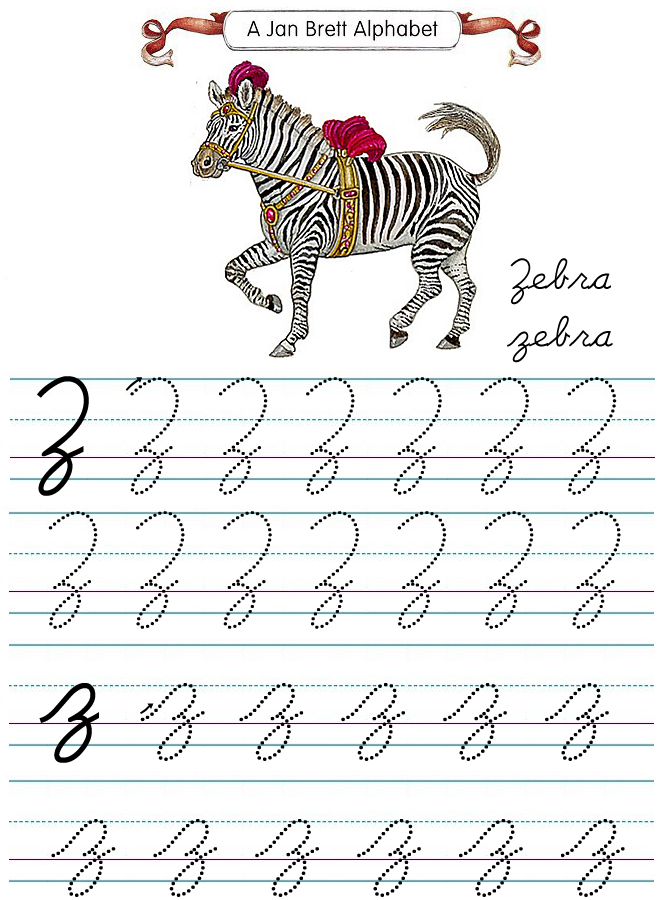 Like most educated Americans, I learned cursive. In the second grade, my class had mastered script, so now it was time to make something beautiful (cursive IS beautiful, right?). I must have spent hours honing my handwriting skills--my Z's were a work of art by themselves.
However, in all the time I spent curling, crossing and dotting, I could never grasp the captial Q. First of all, it was counter-
intuitive. It looked like a two. Nobody had a satisfactory answer as why to use it, so I simply didn't. If a word like Qatar came up, I would make up the Q: A giant lower-case q or an O with a dip down the center, whatever I liked best at the time.
My teacher didn't tolerate blasphemy of the Church of Cursive Science, and flunked me on numerous script tests. But why? It was still beautiful, wasn't it?
In history, it seemed that fancy writing was exaclty that--fair hand--it looked good. It was unique then, but now anybody with a 2nd grade education can do it. However, There is a Modernist approach to cursive...the signature. There it was, the epitomy of self-expression, the calling card.

- The strikeline of the A extends the entirety of the signature, and it is way below the baseline.
- The B could be mistaken for an R, and it's bottom protrudes even further below the basline.

Cursive has been thrown out the window. Instead, picture symbols are depicted, as a throwback to Egyptian Hieroglyphics. It also plays with standard gender symbols, blurring the lines between male and female.
With the branding of a signature, anything can depict your identity. Businesses discovered this long ago, using popular graphics for their identity. If a logo is a signature, then why use cursive? It has become obsolete, but then again, so has most freehand writing. I've come a long way since the 2nd grade, but I can only think one thing--What's next?
Sunday, February 25, 2007
Exploring Modernism at the MFA

Enough with the grand tradition. Let's create and appreciate art that reflects modern life; at least, that's how I feel now that I have finished Art History and can finally take off the blinders. The "grand tradition" of writing essays has been replaced by the more modern teaching tools of journal entries and blog postings. Should I be excited? Hell yeah, I should. I can finally look at and begin to make sense of paintings like this one, Untitled by Yves Tanguy. I can see connections between art and real life, something that would make Modernists proud. The unanswered questions that this painting leaves for the viewer parallel many of life's unanswered questions. It leaves the majority of the interpretation up to the viewer. This focus on the subjective, with a rejection for the objective, stands tall as a modernist value. No information is explicitly given by Tanguy to the viewer; he is all about giving each viewer the oportunity for a unique human experience. Tanguy's minimalist approach to the work, coupled with a clear rejection for the distinction between high and low culture (an almost cartoonish appearance??) leave me wondering what the work was painted for and who commissioned it. (Or if it was commissioned at all!) I guess it shouldn't matter though really, because wouldn't a Modernist be just fine with leaving those facts to the appreciator's imagination...?
Evolution of Art
As with any current trend, in television, film, literature, paintings, sculpture, etc. there will be groups who will move against the constant waves to bring about a new and often disturbing art form. Many times the initial reaction by the general public is a form of disgust, hatred, and misunderstanding. New periods are often described as radicalism but then, in time, evolve into their own "era". From romanticism and impression to modernism and atonality. The relationship of paintings and music can be closely related at all points in time. During our trips to the Museum of Fine Arts this realization became even more apparent. As I examined the Impressionist paintings by Monet, Pissarro, Renoir I could hear pieces composed by the current Debussy and Chopin. The flowing romantic harmonies were present in not only the music but as the paintings as well. As we shifted our position into Modernism I no longer heard this flowing, romantic, music. My thoughts suddenly moved towrads the pieces of Schoenberg, Webern, and Stravinsky. At first sight or listen these art forms can create an unsettling, abstract, feeling that is so well represented by the works. If you consider the opening of the Rite of Spring by Stravisnky or the premiere of Picasso's work public brawls insued. It is ironic that this "extremist" works are now considered masterpieces like those before them. It is easy to categorize these artists into certain areas but in actuality they too evolved through different stages of expression, revolting against themselves. This ever-changing process of evolution is why art, in all forms, will continue to exploit the emotions of the experiencer and bring about timelessness.
Thursday, February 22, 2007
Duchamp truly wants to show the importance of and satisfaction he gains through motion. in this case, it is quite evident that motion is to be achieved through the movement of the bicycle wheel because it is mounted on top of a stationary object. the wheel lacks a seat and is upside down for a reason--that reason ironically being, motion! the artwork itself most definetly lends itself to our first characteristic of modernism. we should not be concerned with what we are percieving the wheel to physically be, rather we should just "see" what is "taking place" in the artwork--that would be motion! secondly, minimalism plays a key role in this work. Duchamp reduced movement completely down to a single object; the bare essential needed to convey the message was utilized. and finally, Duchamp definetely uses an unconventional way of portraying the importance of motion. he chooses to voluntarily juxtapose motion and the absence of motion by wheel and stool respectively. what better way to show than showing objects we are all quite familiar with. i do not think we would gain the same message if Duchamp used a painting or photograph to convey his message. that fact that we can "SEE" the wheel gives us an even stronger sense of movement than if we just "LOOKED" at a 2D representation.

Tuesday, February 20, 2007
Modernism
So we make a detour away from our exploration of film after a discussion of relations of looking in Hitchcock's Rear Window and end up in Modernism. This week we'll explore how Modernism tried, in the words of poet Ezra Pound, to "Make it new!"
SOME CHARACTERISTICS OF MODERNISM
1) subjectivity—how seeing takes place, rather than on what is perceived—instead of objectivity
2) blurring the distinctions between genres and media
3) fragmentation (of time, space, perspective, etc)
4) a tendency toward reflexivity, or self-consciousness, about the production of the work of art, so that each piece calls attention to its own status as a production, as something constructed and consumed in particular way
5) minimalism
6) rejecting the distinction between "high" and "low" or popular culture, both in choice of materials used to produce art and in methods of displaying, distributing, and consuming art.

Marcel Duchamp went so far as to say in 1912, "Painting is "washed up." In abandoning painting, he said, "I want something where the eye and the hand count for nothing." This image here is Marcel Duchamp's "ready-made" The Bicycle Wheel (1913). Do you see it expressing any of the characteristics of modernism listed above?
SOME CHARACTERISTICS OF MODERNISM
1) subjectivity—how seeing takes place, rather than on what is perceived—instead of objectivity
2) blurring the distinctions between genres and media
3) fragmentation (of time, space, perspective, etc)
4) a tendency toward reflexivity, or self-consciousness, about the production of the work of art, so that each piece calls attention to its own status as a production, as something constructed and consumed in particular way
5) minimalism
6) rejecting the distinction between "high" and "low" or popular culture, both in choice of materials used to produce art and in methods of displaying, distributing, and consuming art.

Marcel Duchamp went so far as to say in 1912, "Painting is "washed up." In abandoning painting, he said, "I want something where the eye and the hand count for nothing." This image here is Marcel Duchamp's "ready-made" The Bicycle Wheel (1913). Do you see it expressing any of the characteristics of modernism listed above?
Sunday, February 11, 2007
Let the blogging begin!


Last week, we went to the MFA for our first visit and we had a whirlwind trip through the history of Western art. We didn't get to discuss "relations of looking," so we'll do that in class this week, especially focusing on the turn to modernism. Here we have Mary Cassatt's In the Loge (1878), Pablo Picasso's Les Demoiselles d'Avignon (1907), Georges Braque's
Violin and Candlestick (1910), and marcel Duchamp's Nude Descending a Staircase, No. 2 (1912). How do these paintings express relations of looking?
RELATIONS OF LOOKING: Who is looking at whom (or what)?
1) The gaze in the image (painting, photograph, frame): Who is looking at whom? What does it mean? Does the image look back at you directly in any way? Is there an audience in the image?
2) The viewer's gaze: (looking at the frame): How are you positioned as the viewer? What can you see? What is hidden? What is your relationship to the image?
3) The artist's gaze: From what point of view does the maker of the image work?
Thursday, January 18, 2007
Welcome to the Blog, Unsuspecting Berklee Students

This will be our blog for LHUM 333:Approaches to Visual Culture. This is the first semester I've had a blog for this course, and also my first experiment with team blogging, so it should be interesting. Your required participation is to post 5 times during the semester, but feel free to participate more often. Each of you will have an assigned week to start off discussion (in lieu of your journal entry for that week.) Include both images and words, like you do in your Seeing/Writing journals.
Let's see what happens.
Subscribe to:
Posts (Atom)