Sunday, March 25, 2007
Ipods
The article on Birders was a good one. It got me thinking in other ways of how electronics, including the internet, makes people more antisocial. I want to focus on ipods. I am a Male. I am 22 years old. I love women. I have a love-hate relationship with my ipod. When I don't want to be bothered on the train, or for a few minutes before class I throw on a couple of tunes and relax. But, how am I suppost to meet new people, chicks mostly, when it seems like every young person is ignoring the world and concentrating on that one song that they love. How many potential dates could I have gone one had that girl not had those little ear buds in. Probably zero, but maybe I would have had a chance or two.

Tuesday, March 20, 2007
To Hell in a Technological Handbasket
Here is an article from The Boston Globe that explores the idea that "our reliance on the online universe can endanger the vital tool of narrative." What do you think?
Friday, March 16, 2007
I was thinking about the closing remark I made regarding art in my last post. I was generally saying that artists are distinguished (good) if they are able to convey an eternal emotion in their art. but am I allowed to say that? what constitutes GOOD art? is it good if it sparks controversy, if it does or does not call upon an emotion? is the art good because of the history behind the artist? i believe i was close in saying we must have faith in art and the direction art has taken, but must we have faith in that all art will be good? or that art IS good or bad? because afterall, we WILL NEVER have a standard of comparison. sorry guys if i turned any of you off with my last post! i do acknowledge the fact that art opinions are exactly that--opinions, but can we agree that as an audience, a lot falls on our shoulders and much is expected of us when it comes to enjoying art??
Tuesday, March 13, 2007
Faith in Art
In a broad sense, we are always removed from the art. Yes, we are almost always called to take part in what the artists is thinking, saying, drawing, showing etc...but we, most of the time, are not present when the physical art is being created. What we might feel or "see" when we look at a finished product might be completely different than what the artists "saw" or wanted us to "see" when creating the art. It is a hard process to master and distinguished artists are capable of effectively portraying in a final product, an enternal emotion. Regardless, because we do not observe the process of creation, we do not think about whether somthing is fake or not or whether an emotion we're feeling is the emotion we're intended to feel. Movies are the same thing. We are not affected by actors in front of a green screen versus a true landscape...the same goes for actors "crying on command." We will always be removed from the process, but being removed from the process does not necessarily entail us disbelieving the output. Likwise, actors are always giving a fake peformance (sorry actors). A fake emotion is put on, whether its for an audience or the cameras, so what the difference whether they are in front of a fake mountain or a real mountain? This rules out whether too much technology is too much, because afterall, actors have always been "performing" emotions. Furthermore, I believe the only way art can be lost is when audiences themselves lose interest or distant themselves from enjoying the creative process. Point: In the movie, "The Mummy," historical facts were incorrect, yet did that stop anyone from enjoying the movie? broad, yes...but if one was to say, "that's not how it happened" and others boycotted the movie and everyone lost interest in seeing an entertaining movie, the art would have been lost...correct? I know this is a pessimistic stance, but as long as audiences continue to see movies, enjoy movies, go to museums, love art, read books etc. the excessive or limited use of technology in art is irrelevant. There is always a touch of "fake-ness" in everything, we just should not let it taint our minds or our enjoyment. Likewise, just as a great artist creates an eternal emotion, great actors are capable of making us believe and feel something that we did not experience. To sum it all up, we must have faith in art.
Monday, March 12, 2007
Green screen versus on location.....
I had a question that i was pondering since i saw sky captain (http://www.apple.com/trailers/paramount/skycaptainandtheworldoftomorrow/) and recentley (last night) i saw 300 (http://www.apple.com/trailers/wb/300/), and was thinking to myself, What kind of influence does not filming things on location and rather filming infront of a green screen have on the overall artistic output of the film. In the eyes of the actor, your suposed to imagine yourself in some huge mountainuss landscape or in the ocean etc. and whe your physically looking around you may only see a bunch of cameras, crew and a big green screen and maybe some props, and your dressed like a pilot or something or in classic spartan garb, and it makes me wonder how does that effect the acting? I kind of wanted this to be like a question so please respond with any ideas im interested too see what others have to say. Just wanted to see what you guys thought. I guess the bigger question is how much technology is to much, or how distant from the art can you get before something is lost/changed.
Friday, March 9, 2007
Music and Art
Whats up class?
Today I want to talk about the relationship between art and music.
With the new technology coming out these days, I have been alerted to the fact that I can create art that is not simply a piece of audio, even though I am not a trained artist. As a music synthesis student, I am able to learn programs like Max MSP that can build machines from the ground up. Fellow students of mine are currently working on pieces that use this technology to theire advantage. One of my friends is going to trigger samples via a painting, using color sensors in the computer to trigger different sounds that correlate to the mood of the color. While he paints, the visual of the painting is also being sent to two different projectors where he has designed a program to morph the visuals. This new level of interactivity definitely generates more stimulation in the viewer.
Recently I encountered a video on you tube which was mindblowing. Basic synthesis, the building blocks of any synthesizer, has now been put into a more 3d and artistic medium. This new interactivity with physical objects, art, and synthesis, will pave the way for quicker learning and more expressive music. Here is a link to "Reactable" from Barcelona which makes the software synthesizers I use look boring.
http://www.youtube.com/watch?v=0h-RhyopUmc
For years, artists have inspired musicians and the other way around. M.C. Escher has inspired artists such as Steve Reich and Phillip Glass in the way they compose by the way he formulates his art.
http://www.allposters.com/-sp/Metamorphosis-I-Posters_i96934_.htm
Heres a link to a work by M.C. Escher called Metamorphosis. The concept of the work is to morph one image into a tessellated pattern, then to gradually alter the outlines of that pattern to become an altogether different image. What is interesting to me is that Escher hints to the viewer of his woodcut print(in the booklet that comes with the painting) about how a musician could portray the piece of art with music. He goes as far as describing certain sections as being "3/4 sections" and so forth. "Music for 18 Musicians" is a good example of a song that tries to emulate this fluid change from section to section.
I feel the future holds a great amount of creativity as inspiration grows exponentially. Technology allows me to tap in to the brilliant ideas of the past with a click of the mouse, and dice them up into something new. With the advantage of interactivity, new forms of media, surround sound, digital video and audio, the possibilities of art will grow to new heights in the twenty first century and I plan to be part of that.
Thanks-sam
Today I want to talk about the relationship between art and music.
With the new technology coming out these days, I have been alerted to the fact that I can create art that is not simply a piece of audio, even though I am not a trained artist. As a music synthesis student, I am able to learn programs like Max MSP that can build machines from the ground up. Fellow students of mine are currently working on pieces that use this technology to theire advantage. One of my friends is going to trigger samples via a painting, using color sensors in the computer to trigger different sounds that correlate to the mood of the color. While he paints, the visual of the painting is also being sent to two different projectors where he has designed a program to morph the visuals. This new level of interactivity definitely generates more stimulation in the viewer.
Recently I encountered a video on you tube which was mindblowing. Basic synthesis, the building blocks of any synthesizer, has now been put into a more 3d and artistic medium. This new interactivity with physical objects, art, and synthesis, will pave the way for quicker learning and more expressive music. Here is a link to "Reactable" from Barcelona which makes the software synthesizers I use look boring.
http://www.youtube.com/watch?v=0h-RhyopUmc
For years, artists have inspired musicians and the other way around. M.C. Escher has inspired artists such as Steve Reich and Phillip Glass in the way they compose by the way he formulates his art.
http://www.allposters.com/-sp/Metamorphosis-I-Posters_i96934_.htm
Heres a link to a work by M.C. Escher called Metamorphosis. The concept of the work is to morph one image into a tessellated pattern, then to gradually alter the outlines of that pattern to become an altogether different image. What is interesting to me is that Escher hints to the viewer of his woodcut print(in the booklet that comes with the painting) about how a musician could portray the piece of art with music. He goes as far as describing certain sections as being "3/4 sections" and so forth. "Music for 18 Musicians" is a good example of a song that tries to emulate this fluid change from section to section.
I feel the future holds a great amount of creativity as inspiration grows exponentially. Technology allows me to tap in to the brilliant ideas of the past with a click of the mouse, and dice them up into something new. With the advantage of interactivity, new forms of media, surround sound, digital video and audio, the possibilities of art will grow to new heights in the twenty first century and I plan to be part of that.
Thanks-sam
Sunday, March 4, 2007
Post Modernism: The Cursive Desuetude
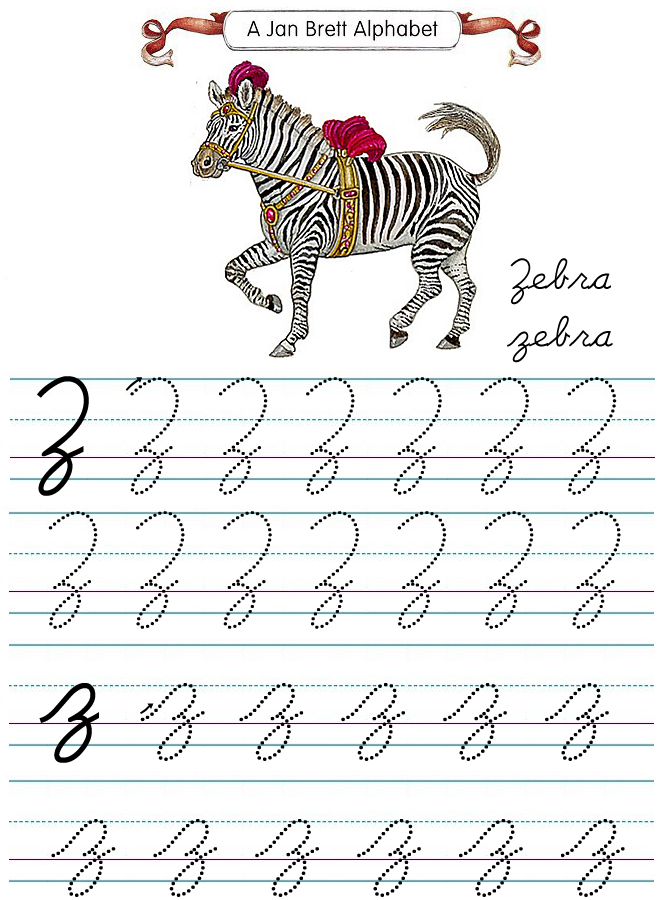 Like most educated Americans, I learned cursive. In the second grade, my class had mastered script, so now it was time to make something beautiful (cursive IS beautiful, right?). I must have spent hours honing my handwriting skills--my Z's were a work of art by themselves.
However, in all the time I spent curling, crossing and dotting, I could never grasp the captial Q. First of all, it was counter-
intuitive. It looked like a two. Nobody had a satisfactory answer as why to use it, so I simply didn't. If a word like Qatar came up, I would make up the Q: A giant lower-case q or an O with a dip down the center, whatever I liked best at the time.
My teacher didn't tolerate blasphemy of the Church of Cursive Science, and flunked me on numerous script tests. But why? It was still beautiful, wasn't it?
In history, it seemed that fancy writing was exaclty that--fair hand--it looked good. It was unique then, but now anybody with a 2nd grade education can do it. However, There is a Modernist approach to cursive...the signature. There it was, the epitomy of self-expression, the calling card.

- The strikeline of the A extends the entirety of the signature, and it is way below the baseline.
- The B could be mistaken for an R, and it's bottom protrudes even further below the basline.

Cursive has been thrown out the window. Instead, picture symbols are depicted, as a throwback to Egyptian Hieroglyphics. It also plays with standard gender symbols, blurring the lines between male and female.
With the branding of a signature, anything can depict your identity. Businesses discovered this long ago, using popular graphics for their identity. If a logo is a signature, then why use cursive? It has become obsolete, but then again, so has most freehand writing. I've come a long way since the 2nd grade, but I can only think one thing--What's next?
Subscribe to:
Posts (Atom)