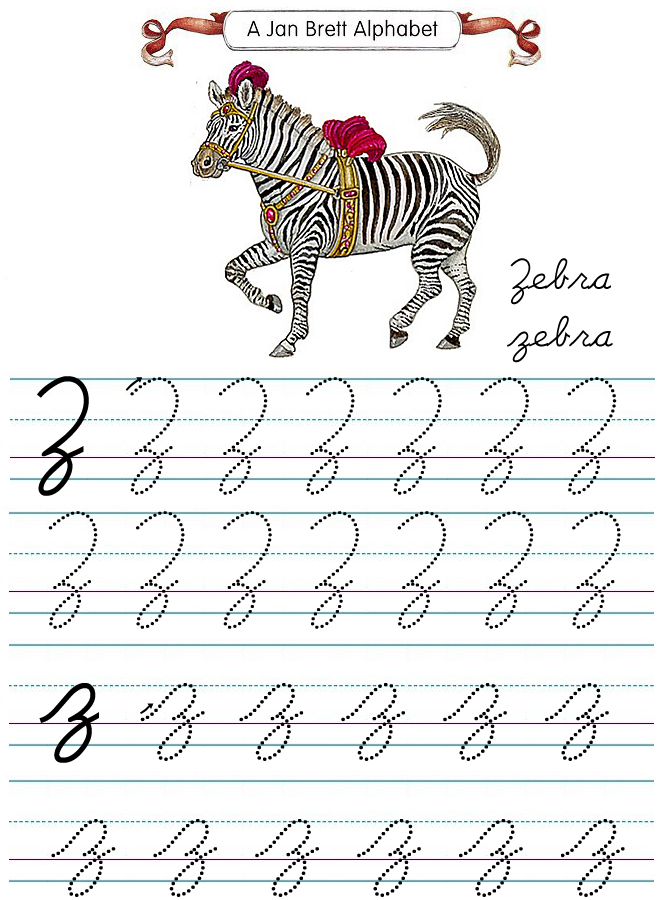
 Like most educated Americans, I learned cursive. In the second grade, my class had mastered script, so now it was time to make something beautiful (cursive IS beautiful, right?). I must have spent hours honing my handwriting skills--my Z's were a work of art by themselves.
However, in all the time I spent curling, crossing and dotting, I could never grasp the captial Q. First of all, it was counter-
intuitive. It looked like a two. Nobody had a satisfactory answer as why to use it, so I simply didn't. If a word like Qatar came up, I would make up the Q: A giant lower-case q or an O with a dip down the center, whatever I liked best at the time.
My teacher didn't tolerate blasphemy of the Church of Cursive Science, and flunked me on numerous script tests. But why? It was still beautiful, wasn't it?
In history, it seemed that fancy writing was exaclty that--fair hand--it looked good. It was unique then, but now anybody with a 2nd grade education can do it. However, There is a Modernist approach to cursive...the signature. There it was, the epitomy of self-expression, the calling card.

- The strikeline of the A extends the entirety of the signature, and it is way below the baseline.
- The B could be mistaken for an R, and it's bottom protrudes even further below the basline.

Cursive has been thrown out the window. Instead, picture symbols are depicted, as a throwback to Egyptian Hieroglyphics. It also plays with standard gender symbols, blurring the lines between male and female.
With the branding of a signature, anything can depict your identity. Businesses discovered this long ago, using popular graphics for their identity. If a logo is a signature, then why use cursive? It has become obsolete, but then again, so has most freehand writing. I've come a long way since the 2nd grade, but I can only think one thing--What's next?

5 comments:
In a way I remember cursive. Most of what I remember are the letters in my name. After learning all that cursive where does it get you? I always heard "You will use it when your older." But how old? Is there some law that when you turn forty you start using cursive? Do second graders still use cursive? It would seem kind of pointless now due to the rapid advances in technology. Just know that antime you need to use the letters T O M M Y F U R L O N G I'll be there for you
I didn't mention this in the blog, but cursive as a signature is a western cultural hang-up. In sign language, a signature is sometimes signed not just in letters but in motions too. For instance, instead of spelling out "Tommy Furlong," which they could probably sign easily, they might just sign TF and musician. Similarly in China, people design their own chops, or seals, based on profession, family, or other identity DNA.
By saying all of this, I'm trying to get the point accross that a western aesthetic shaped cursive as the standard in scripted beauty. The signature was a crime of creative passion. Once it was assimilated by others, the creative passion became lackluster and lost meaning.
Now it's so far removed from creativitiy that we've rejected it. Well maybe not. Just look at graffiti...Make it new!
Yes it seems that the only thing that we hand write that is seen by the public would be our signature since most of what we write with today is all printed and done on computer. I honestly cant even remember half of the letters in cursive and if i tried to do it today it would be horrible. I wonder if the same for other forms of art will be the same? Like video or photography, for a long time was not something just anybody can do, you really had to have talent and motivation to go through all the steps. But now everybody can get a camera or a camcorder, look at youtube.... Could these forms also suffer the same as the "Cursive signature" and become "lackluster" and "loose meaning" because of the availability and ease of use for the masses?
There is a short story I teach in my "Nature of Technology" class called "Speech Sounds" by Octavia Butler; it takes place in a post-apocalyptic America where half the people have lost the ability to speak and the other half to read. They communicate through gestures and instead of names, they have objects that they show people. Valerie Rye has a pin of a wheat stalk for her name and she meets a man whose object is a shiny black rock. She decides to call him Obsidian in her mind, and there is no way he can communicate to her what his name really is.
Aaron's entry--and the comments--remind me of this story. There is something happening to writing in our culture, whether it is IM-shorthand ot typing replacing handwriting.
What's also interesting is Aaron's depiction of curisve as a right-or-wrong, external aesthetic conveyed by his flunk-happy teacher. Is cursive one of the classical, elite arts?
I think think cursive should definitaly be considered a classical art form. Theres something very sophisticated about it. It's almost like someone took the act of writing, and turned it into art, much like graffit. In ajoining all the letters of a word, your making each word a single work of art. Thomas Jefferson was among the first to write in all cursive, for instance, most of the decleration of independance. I think people of the 18th century were so "art happy", they couldn't wait to turn anything into a representation of art.
Post a Comment